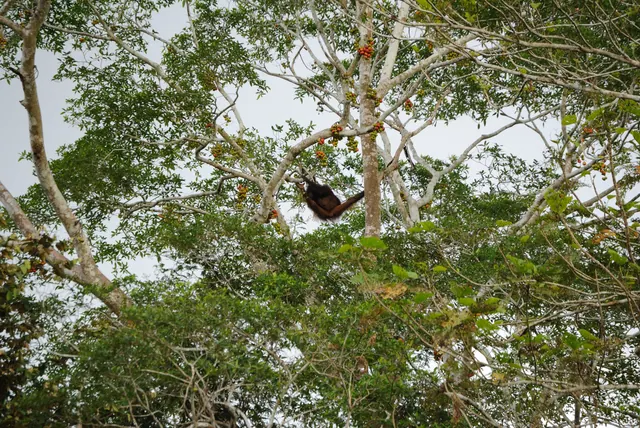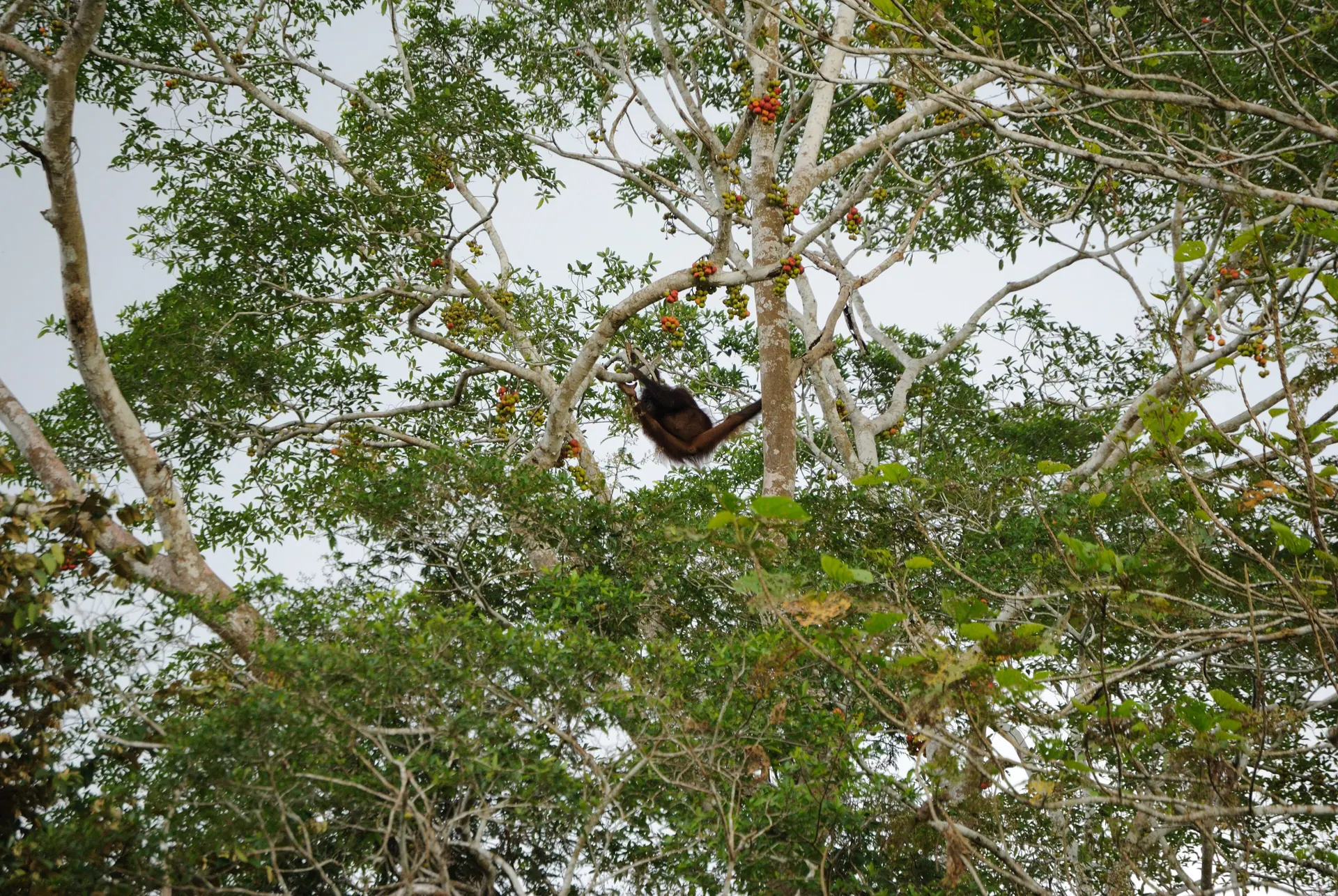
The boat drifts with its engine off, the river still steaming in the first light, and your guide is pointing at a tangle of leaves high in a fig tree. Something shifts. A long orange arm reaches out, then a face, then a young orangutan swinging after its mother! Moments like that are why people ask about the best time to see orangutans in Borneo, and the honest answer is kinder than you'd think: there's no bad month, only better odds in some.
Here's how the year works in Sabah, what really moves your chances, and which months the UK's orangutan holidays leave.
What is the best time to see orangutans in Borneo?
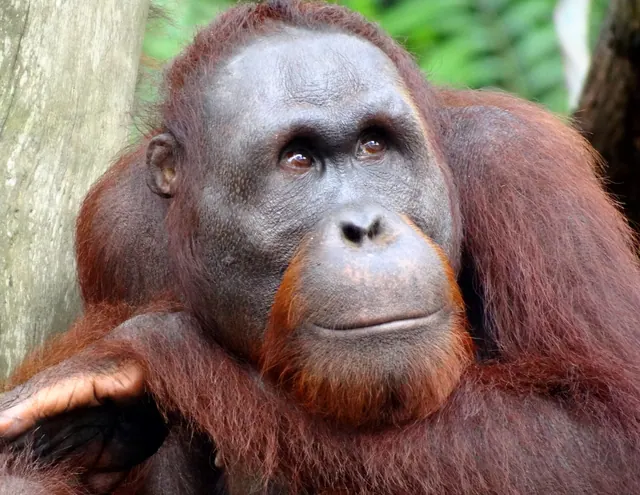
Semi-wild orangutans at Sepilok
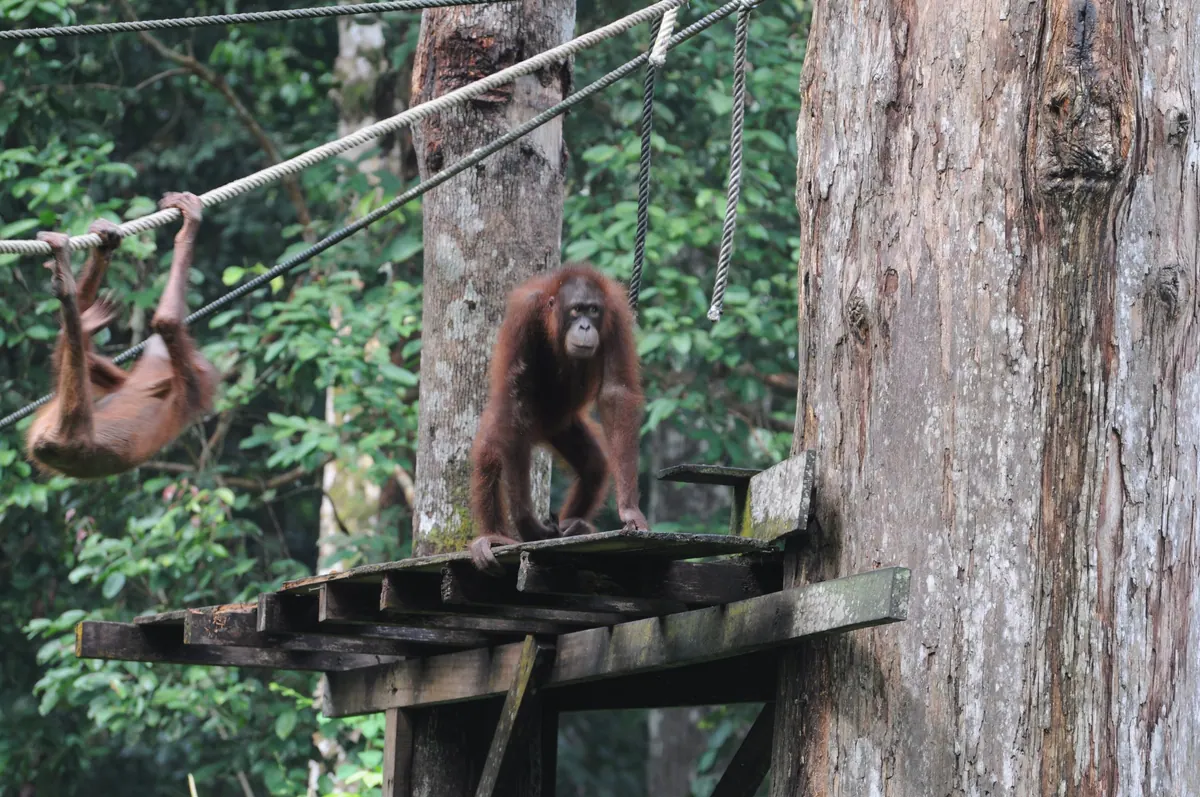
Any month of the year. The Sepilok Orangutan Rehabilitation Centre is open every day and puts fruit out on its feeding platform each morning and afternoon, so the weather rarely stops you seeing orangutans here. It's a rehabilitation centre rather than a zoo or sanctuary for show, and the orangutans come in from the forest when they choose.
Orangutans in the wild on the Kinabatangan
For wild orangutans along the Kinabatangan River, the dry season from roughly March to October gives you calmer water, firmer boardwalks and more cruises that go ahead as planned.
The longer answer is that the forest, not the calendar, has the final say.
Orangutans don't migrate. They live in the same patch of forest all year, so the question is never whether they're there but whether you'll spot one. Rain, river level, how much fruit is ripe and the hour you're out on the water all play a part. So does luck, and nobody honest will promise you a wild sighting.
Borneo month by month for orangutan watching
Sabah, the Malaysian state in the north of Borneo where the classic orangutan route runs, sits close to the equator, so the climate is hot and humid in every month. What changes is the rain. The northeast monsoon brings the wettest spell, and the Kinabatangan can burst its banks in the heart of it.
| Months | Weather in Sabah | Sepilok | Wild orangutans on the river |
|---|---|---|---|
| November to February | Wettest, northeast monsoon; heavy downpours | Open daily; the forest trails get muddy | Possible; high water can flood banks and change cruise routes |
| March and April | Rain easing; shoulder season with fewer crowds | Good; fewer visitors on the boardwalk | Improving as the river settles |
| May to August | Dry season weather, hot, short heavy showers; peak season prices | Good, though fewer may come in to feed if the forest is fruiting | Often good sightings; busiest months at the lodges |
| September and October | Mostly dry at first, rain building through October | Good, and calmer after the European summer holidays | Good; river usually lower and steadier |
Treat it as a guide, not a timetable. Plenty of January and February days are dry, and a July afternoon can bring a downpour that turns a jungle path to soup. December and January are usually the wettest weeks of the year in Sabah. If you're weighing up the wider trip, beaches and trekking included, our guide to the best time to visit Borneo covers the whole island's weather.
Why fruiting matters more than the month you pick
Orangutans live mostly on fruit, and they'll travel through the canopy to wherever it's ripe. Most of the guides you'll read give a fruiting season, but they don't agree on it: some say May and June, others June to August. There's a reason for that. Many of Borneo's big rainforest trees fruit together in irregular "mast" years, often several years apart, rather than to a neat annual calendar. In lean years orangutans fall back on young leaves and bark.
This creates a trade-off nobody mentions.
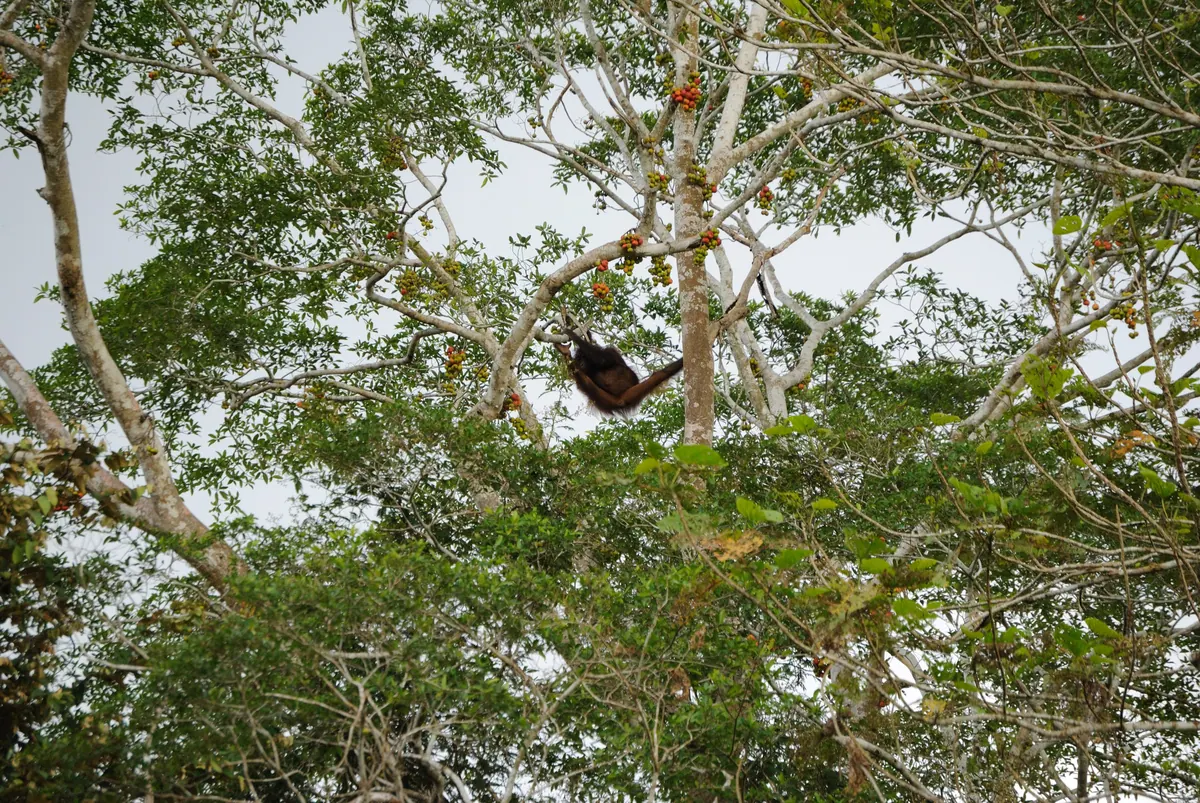
When the forest is heavy with fruit, fewer orangutans bother with the platform at the centre. The Orangutan Appeal UK says a show can never be guaranteed, especially in fruiting seasons, and that a quiet platform is a good sign: those orangutans are feeding themselves. On the river, the same fruiting figs can pull wild orangutans close to the bank, where the boats can see them. A trip that takes in both places hedges your bets either way.
Time of day counts for more than time of year
Ask any Kinabatangan boatman and they'll tell you the same thing. Go early, go late.
Orangutans build a fresh nest of bent branches each night, and at first light they're often still in or near it, which is when a sharp-eyed guide can pick out the shape against the sky. By the heat of midday most wildlife is resting out of sight. Then, as the sun drops and the jungle cools a little, proboscis monkeys gather in the riverside trees to settle for the night and the forest wakes up again. That's why every lodge plans its cruises around dawn and dusk, and why the organised holidays give you more than one of each.
At the rehabilitation centre it's simpler. Arrive for the morning or afternoon feed, stay on the walkway, keep your voice low and leave the flash off. Check the times on the centre's own page before you go, as they can change.
Why a September departure works for a first trip
Travelsphere's The Best of Borneo: Orangutans and Rainforests leaves in September, and for a first long-haul wildlife trip that's a well-judged month. The drier season usually hasn't broken yet, the river is normally steady, and the European summer rush has eased off at the lodges.
The holiday gives you a morning at Sepilok for the feed and the Bornean Sun Bear Conservation Centre, then nights at Abai Jungle Lodge and Kinabatangan Riverside Lodge at Sukau, with an early cruise on Pitas Oxbow Lake, where pygmy elephants are sometimes seen at the water's edge, and an evening firefly cruise. Splitting your river time between Abai and Sukau means more dawns and dusks on the water, which does more for your odds than any month could. It finishes with a beach stay at Shangri-La Rasa Ria. You can read more about Borneo in September, or go straight to Travelsphere's own page for dates.
Holidays that leave in other months
Other UK tours to Borneo spread across more of the year:
- Newmarket's Orangutans and Rainforest Adventure runs from February right through to November
- Just You's Wild Borneo, for solo travellers, leaves between May and October
- Explore's Sarawak and Sabah Discovery runs from May to November
- The Best of Borneo with a Singapore add-on follows the same September dates
Can you go in the wet season?
Yes, and some people say the wet season is the best time to go for quieter lodges and lower prices. The forest is lush and the feeding platform keeps working whatever the sky is doing. But go with your eyes open. Heavy rain can cancel or shorten a cruise, high water floods the lower boardwalks and trails, and leeches love a wet path. Wildlife sightings from the boats can be harder when the banks are flooded. If you've only got one chance at Borneo and orangutans in the wild top your list, the drier months are the safer bet.
Heat, humidity and leeches: what any month feels like
There's no cool season in lowland Sabah; only up on the slopes of Mount Kinabalu does the weather feel fresher. You'll feel the humidity the moment you step off the plane, and it stays with you on every walk, so pace yourself, drink plenty and take the shade when you can. Boat boarding needs a steady step from a jetty or a riverbank, and Travelsphere asks for a good level of fitness on its tour because of boats, slopes and uneven paths.
Leech socks are worth packing for forest walks after rain. They're harmless, just unwelcome.
Health and safety before you book
For jabs and mosquito advice, check NaTHNaC's Borneo health page and talk to your GP or practice nurse well ahead of travel. On safety, the Foreign Office advises against all but essential travel to the islands and dive sites off Sabah's east coast between Sandakan and Tawau. Sepilok, the Kinabatangan and Kota Kinabalu aren't covered by that warning, but read the GOV.UK Malaysia advice and check it before you travel.
What an organised holiday handles, whatever the weather
Borneo's weather can rearrange a day in minutes, and that's where having someone else in charge pays off.
- Rooms at river lodges, which fill early for the drier months
- Long-haul flights from the UK and the internal flight to Sandakan
- Arriving at Sepilok for the feed rather than racing the clock
- Boat transfers to lodges that you can only reach by water
- Moving a cruise to the next dawn if a storm rolls through
- Local guides who are out on the river every day and know where to look
- A Holiday Director to sort the hiccups, with everything on one booking
To see which holidays visit Sepilok and stay on the river, compare them on our orangutan holidays page. For the places themselves, read where to see orangutans, meet the animal in our guide to the Bornean orangutan, or weigh up Borneo or Sumatra if you're still choosing. Sarawak's centres, Kalimantan in Indonesian Borneo and remote reserves like Danum Valley follow their own patterns, but this guide sticks to Sabah, where the classic route runs. Whichever month you pick, the boat, the guide and the early start will do far more for your chances than the calendar.
Holidays that go there
Let a tour handle the internal flights, the river boats and the jungle lodges.
 Travelsphere
The Best of Borneo: Orangutans and Rainforests with Singapore add-on
The Best of Borneo wildlife tour with three nights in Singapore added before the flight home.
- Sepilok orangutans
- Kinabatangan river cruises
- Rasa Ria
- Singapore
From £4,759about £297 a day · per person
See dates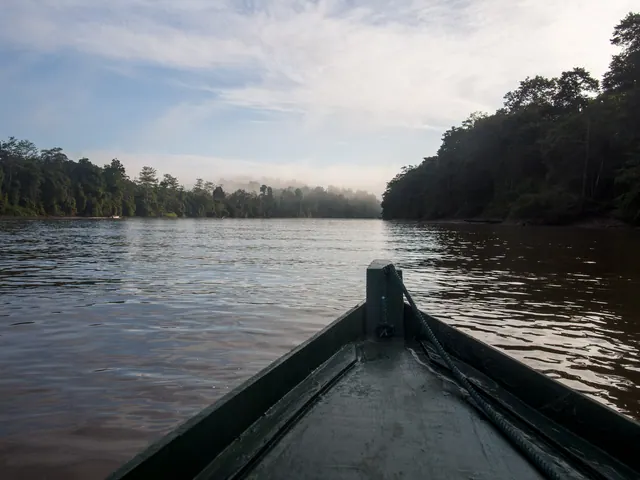 Newmarket Holidays
Borneo's Orangutans and Rainforest Adventure
Sandakan, Sepilok, the Kinabatangan and Kinabalu Park, finishing with four nights on the beach at Rasa Ria, with flights from Heathrow.
- Sepilok orangutans
- Kinabatangan river cruises
- Kinabalu Park
- Rasa Ria
From £3,188about £245 a day · per person
See dates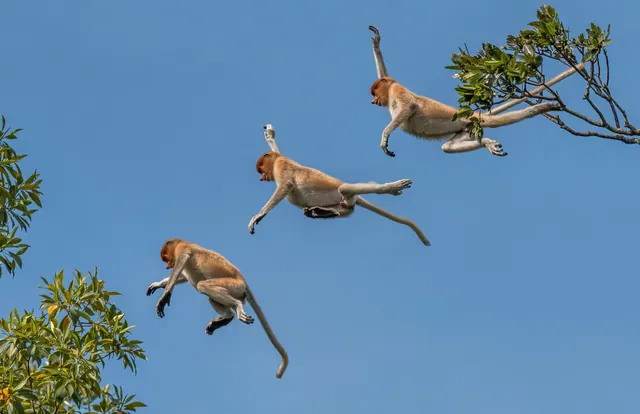 Titan Travel
Wild Borneo
A small-group wildlife tour from Kota Kinabalu through Kinabalu Park, Sukau and Sandakan, ending at Rasa Ria, with home pick-up for the flight.
- Kinabalu Park
- Kinabatangan river cruises
- Sepilok orangutans
- Rasa Ria
PriceSee live priceTitan Travel site
See datesPrices are per person sharing, from the operators' own sites when we checked in October 2026. They change with dates and offers, so check the live price before you book.